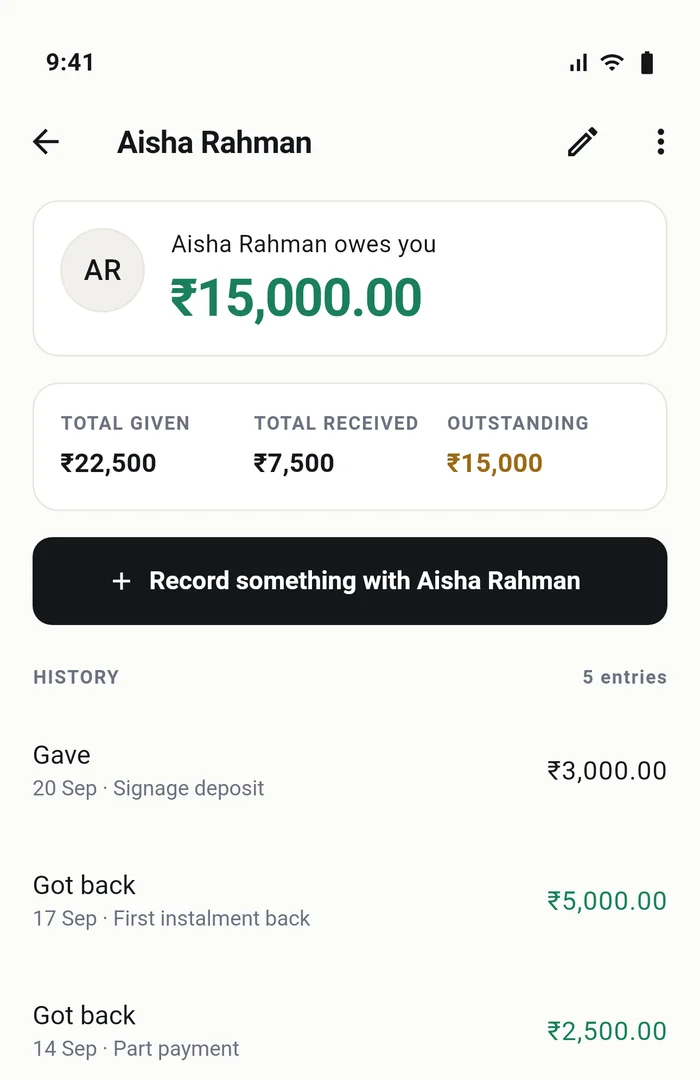
Aisha Rahman owes you ₹15,000 since 17 September
Lending money to family and friends takes a second. Remembering the details nine months later does not. Sulha keeps the record: who, how much, when, and what it was for.
Sulha
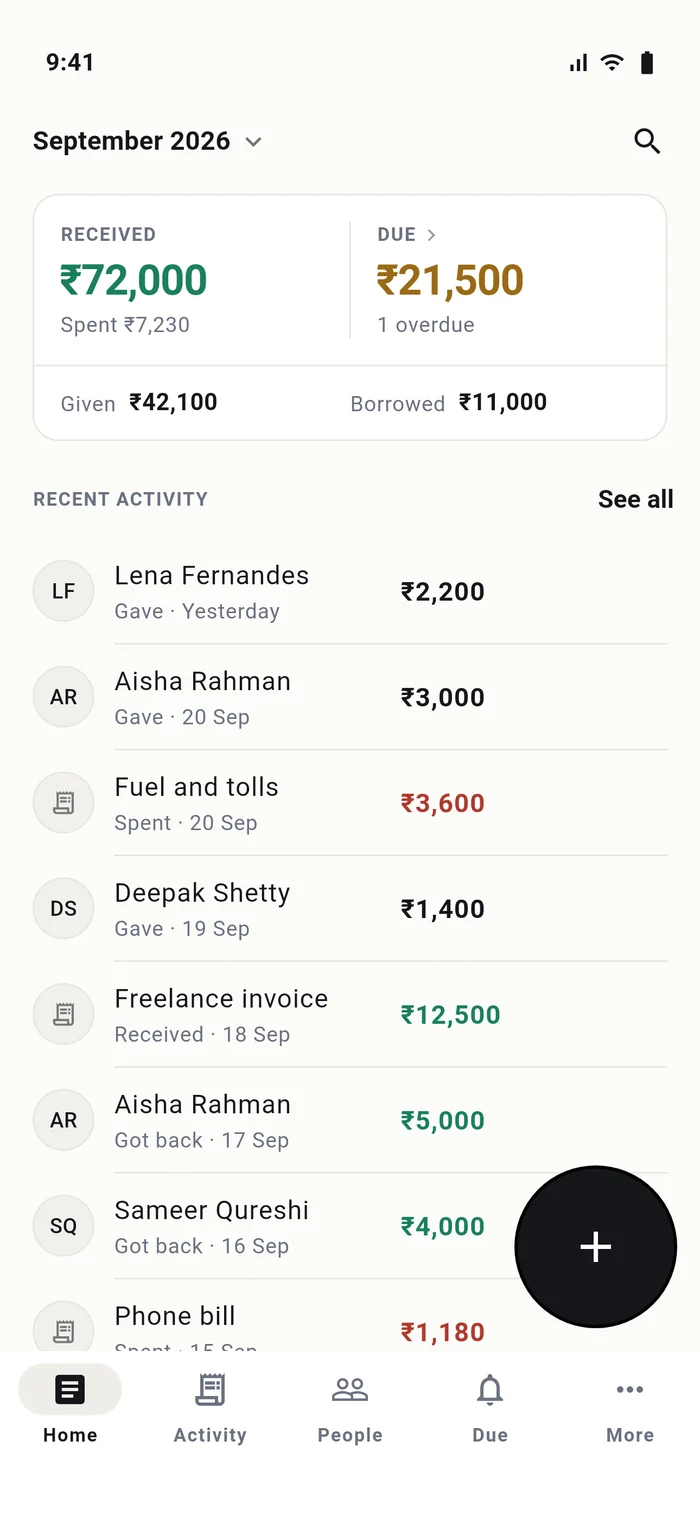
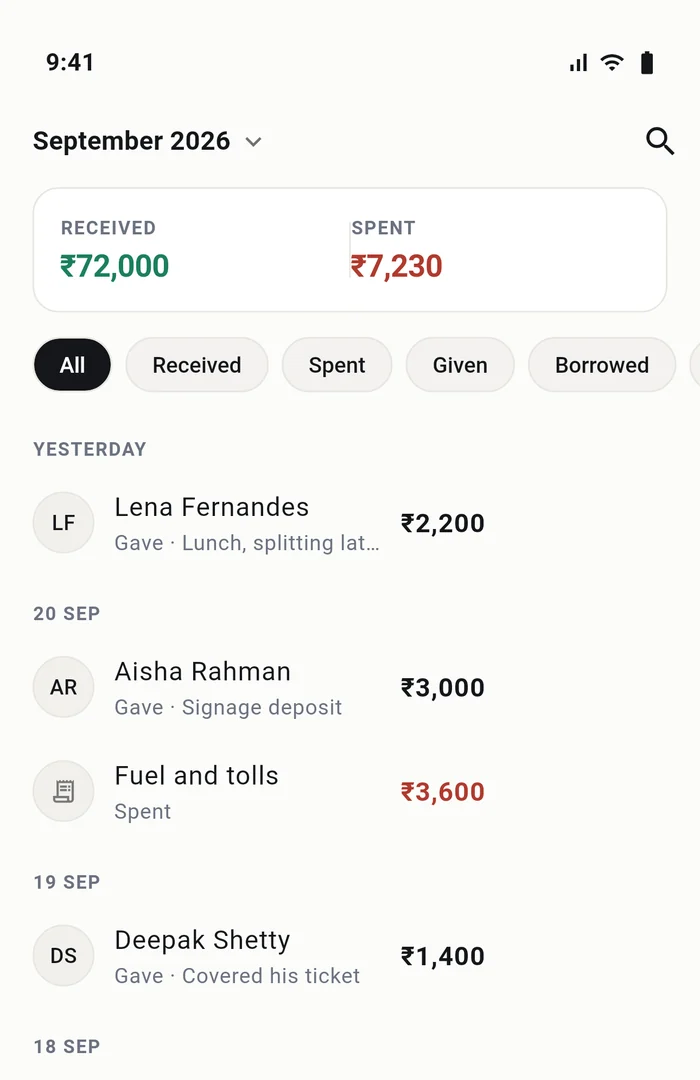
| Date | Entry | Kind | Amount |
|---|---|---|---|
| 21 Sep | Lena Fernandes | Gave | ₹2,200 |
| 20 Sep | Aisha Rahman | Gave, signage deposit | ₹3,000 |
| 20 Sep | Fuel and tolls | Spent | ₹3,600 |
| 19 Sep | Deepak Shetty | Gave, covered his ticket | ₹1,400 |
| 18 Sep | Freelance invoice | Received | ₹12,500 |
| 17 Sep | Aisha Rahman | Got back, first instalment | ₹5,000 |
Sulha keeps that list, for every person you deal with, on your phone.
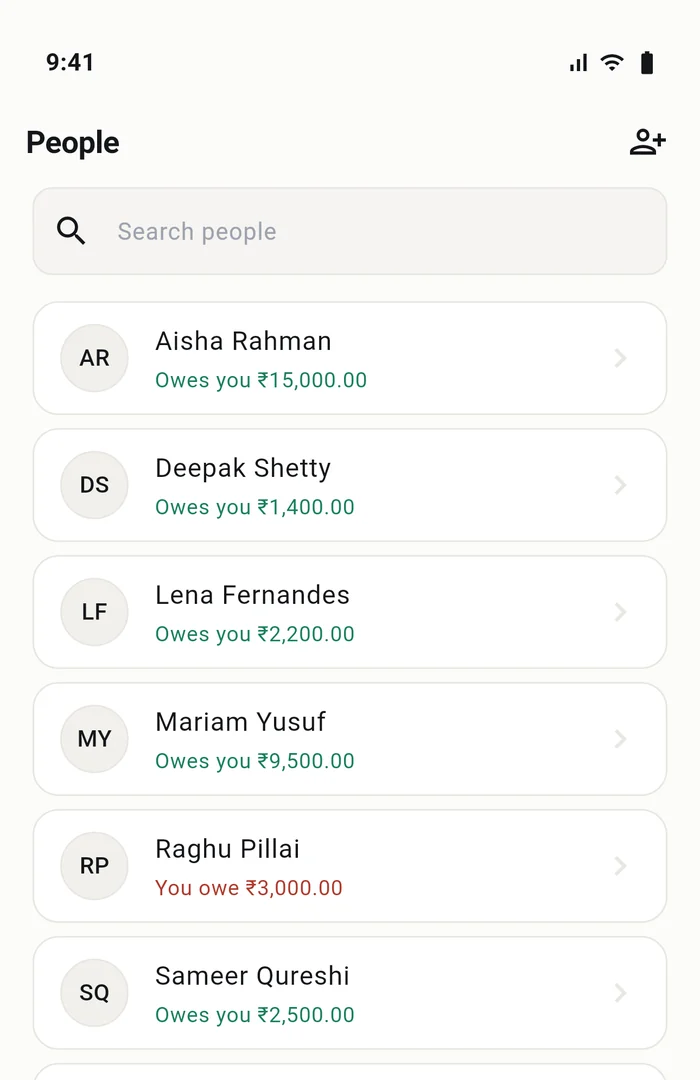
Everyone you lend to has a page.
Open a person and the running total comes first: what you've given them, what has come back, and what is still out. Underneath it sits every entry that added up to the number.
The list of people is ordered the same way — the amount next to each name is what stands between you right now, not what you have moved back and forth over the years.
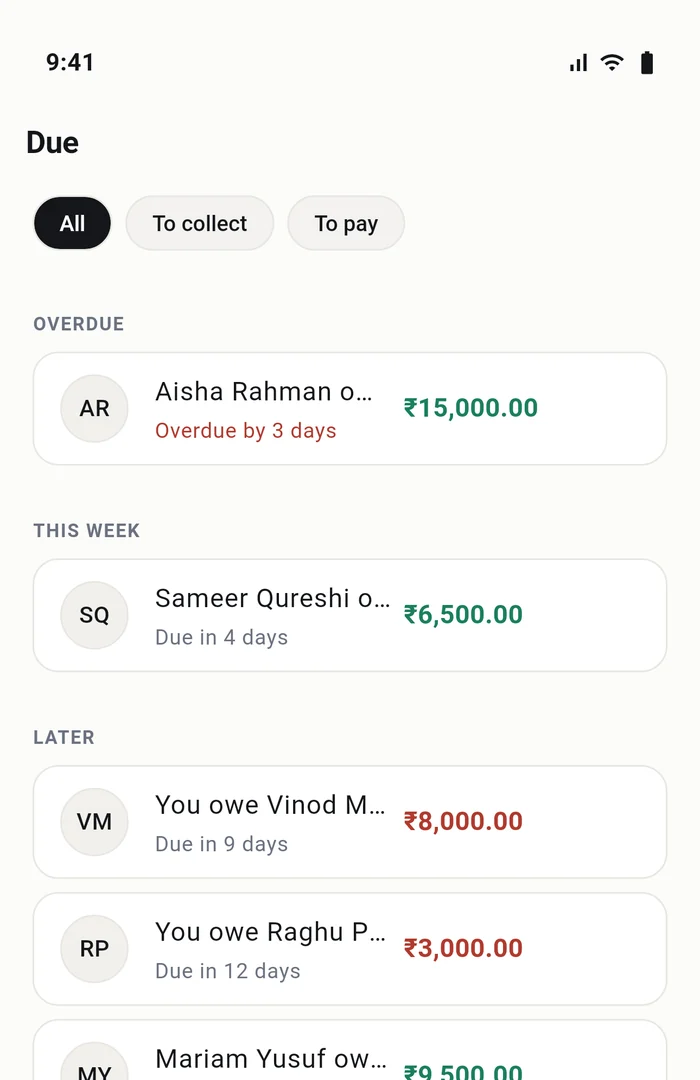
What's due, and what's already late.
Give an entry a date when you record it. Due then keeps everything in the order that matters — overdue at the top, then this week, then later — so you can ask before it turns into a conversation neither of you wants.
Money you owe sits in the same list as money owed to you, so nothing is quietly one-sided.
The note you wrote stays with the amount.
Signage deposit. Lunch, split. Second lot of stock. Nine months on, the reason is usually the part in dispute, so Sulha keeps it attached to the entry rather than in your head.
Filter any stretch of time by given, received, spent or borrowed, and take the result out as a PDF, a spreadsheet or a CSV when you need something to send.
Nothing is sent to us.
There is nothing to send it to.
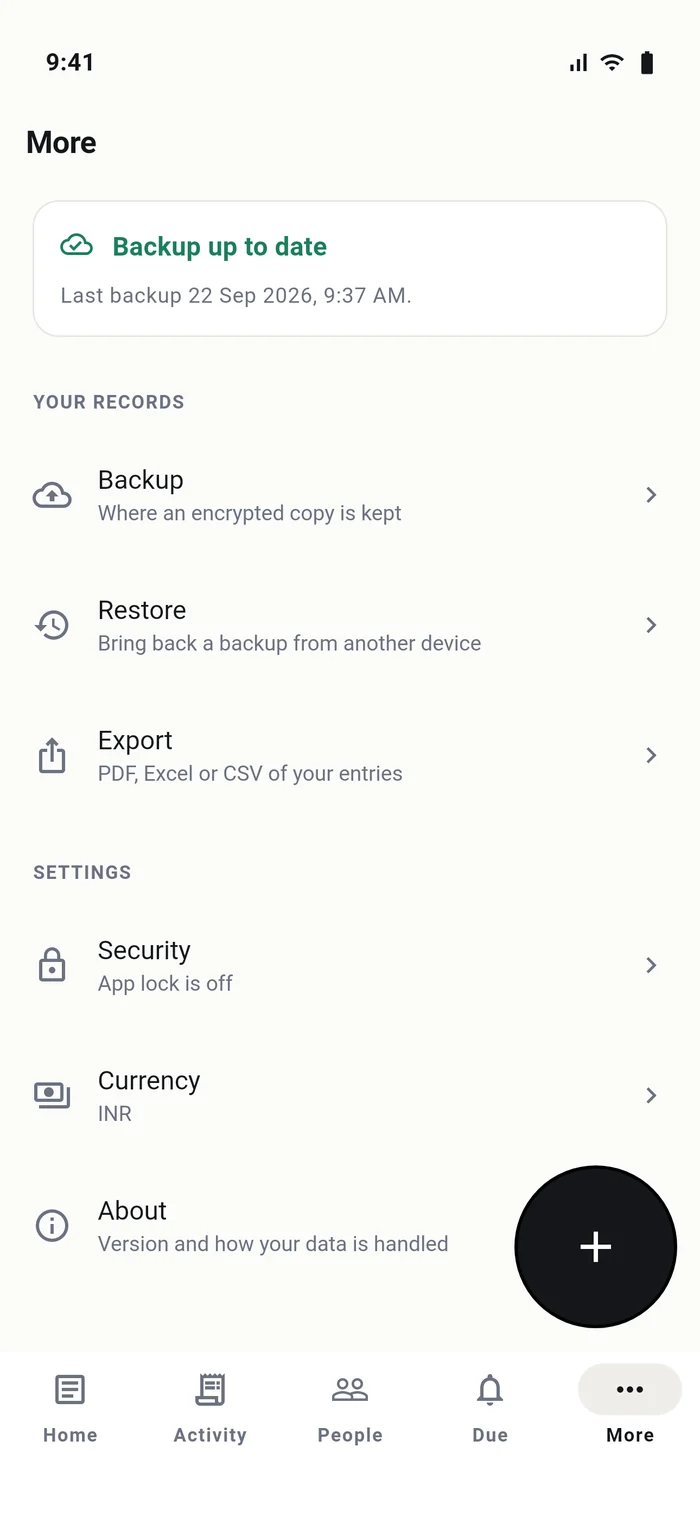
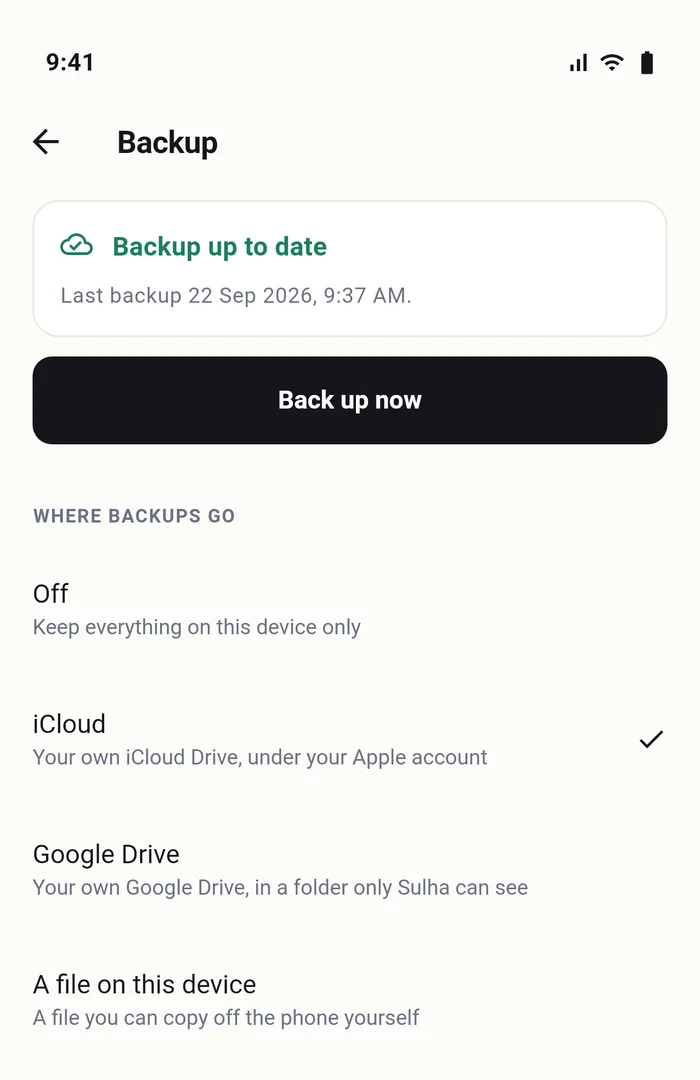
Sulha has no account, no sign-in and no server. Every entry is written to your own phone and read back from it. If you never turn on backup, your records never leave the device at all.
Your phone
Every entry is written here and read from here.
Your cloud account
Your own iCloud Drive or your own Google Drive, in a folder only Sulha can see.
Our servers
We do not run any. There is no copy of your ledger anywhere but your phone and your drive.
That is the app. This website keeps its own visitor analytics, which is a separate thing and never touches your records — the privacy page says exactly what it collects.
The backup is encrypted on the phone, before it leaves, with a key the phone generates and keeps. We never receive the file, and we could not open it if we did. Restoring it on a new phone needs that key, which is why Sulha asks you to keep it somewhere safe.
You can also write the same encrypted file straight to the phone's storage and move it yourself, with no cloud involved.
Free, with nothing to unlock.
No ads, no subscription, and nothing about you sold to anyone. Everything in the app is in the app.